

In June 2021, a month after his fund paid $140 million for the Red Hot Chili Peppers’ catalog, Merck Mercuriadis told *Variety* there was no bubble in music rights. “A bubble is when somebody is overpaying for something that doesn’t have the sort of metrics that these investments have,” he said. By late 2023, Hipgnosis Songs Fund’s board was issuing what its chair called a “health warning” about its own asset values. The independent valuer resigned. A reassessment sliced 26% off the fund’s stated worth in a single report, and currency effects pushed the real number to 33%. Shares fell to an all-time low.
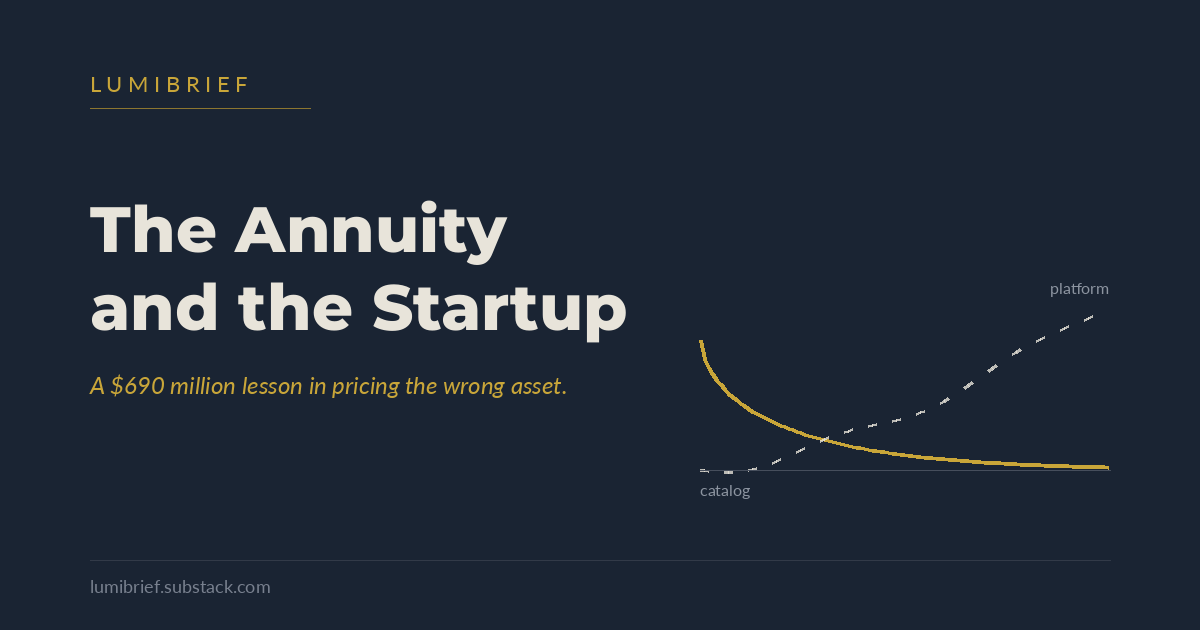
Give Mercuriadis this much: music catalogs really do have measurable metrics. His fund just measured the wrong ones. It had priced 65,000 songs on the assumption that earnings would keep climbing the way a growing company’s revenue does. What a later valuer found instead was a portfolio doing what royalty income actually does: rising fast in the first few years after release, then settling into a long, slow decline. Hipgnosis had underwritten a startup. What it bought was a bond.
This should bother anyone allocating capital into African creative IP right now. In the same period Hipgnosis was unwinding, money was moving into African music platforms on the opposite assumption, and nobody called it a bubble. Kupanda Holdings, backed by TPG Growth, took equity in Mavin Global in 2019, ahead of Universal later buying a majority stake. Warner acquired the distribution platform Africori outright. Afreximbank took an equity position in the direct-to-fan platform CREAM around the same time the bank committed a reported $1 billion to African creative industries more broadly. Every one of those deals was priced like a growth business: market share, user acquisition, the bet that the platform becomes more valuable as more artists and fans route through it. Nobody ran a decay curve on CREAM’s user base the way Shot Tower ran one on Hipgnosis’s back catalog. Nor should they have. The two are not the same kind of asset, and treating them as though they are is exactly the mistake that gutted Hipgnosis.
The distinction matters beyond any single fund’s balance sheet. African creative IP is one of the few asset classes where the continent is a genuine net exporter of globally demanded product: the songs travel, the streams accumulate in London and Paris and Nairobi, the value is real. Almost none of it gets collateralized locally, because almost none of it has been sorted cleanly enough to price. The same category-confusion shows up wherever African assets meet institutional capital: plenty of demand, mismatched underwriting discipline. Get the categorization right on catalog versus platform, and you get financeable, legible assets. Get it wrong, and the value stays real but unbankable — a worse outcome than a mispriced deal, since at least a mispriced deal shows up on someone’s balance sheet.
The word “music” is hiding two different balance sheets.
A song catalog is a right to collect income from work that already exists. Nobody is writing new hooks for it. Its earnings peak somewhere in the first 2 to 5 years after release, then decline toward a long, flat tail, predictably enough that buyers price it the way a bond desk prices a long-duration instrument, off a discount rate rather than a growth story. A platform is an operating business: a label, a distributor, a rights-management tool, a direct-to-fan app. It has a product roadmap, a user base it’s trying to grow, and a moat it’s trying to widen. What it will become matters far more than what it already collects. One is an annuity you buy because the cash flow is dependable. The other is a startup you buy because the cash flow doesn’t exist yet and you’re betting it will.
Confuse the two and the error compounds regardless of direction. Overpay for a catalog using platform-style growth assumptions and you get Hipgnosis, a board explaining to shareholders why the songs are worth a third less than the fund said they were. Run the same mistake the other way, treating a platform’s growth story with catalog-style skepticism about decay, and you pass on deals like CREAM and Mavin, real equity gains that had nothing to do with royalty curves at all.
Run the catalog side of the math first, because it’s the more expensive place to be wrong
By 2026, independent catalog deals were closing at roughly 12 to 18 times net publisher’s share, down from 18 to 25 times at the 2021 peak, 3 to 6 turns of compression driven mainly by higher interest rates repricing every long-duration income stream. There’s a direct relationship between the multiple a buyer pays and the discount rate baked into it: roughly 10x implies a 14% discount rate, 16x implies about 9%, and 22x implies something closer to 7%. That’s bond territory, reserved for blue-chip, decades-old catalogs with the flattest, most proven decay curves. When Kroll valued the legacy Hipgnosis portfolio for a securitization, it assumed a long-term growth rate of about 2%, modest and decay-aware, a long way from Mercuriadis’s original growth story. Shot Tower’s earlier, harsher review had used a 9.63% discount rate and arrived at a valuation $690 million below what the fund had claimed the year before.
Put a number on what that gap means for a single deal. Take a catalog earning $500,000 a year in net publisher’s share. Price it the way Hipgnosis priced its early acquisitions, an 18x multiple implying roughly a 9% discount rate and an optimistic growth assumption, and you get a $9 million valuation. Price the same catalog the way the market prices a disciplined 2026 deal, 13x, a 12% discount rate, decay properly modeled, and you get $6.5 million. Same songs, same royalty statements, a $2.5 million gap that exists entirely inside the assumption about how fast the earnings fade. That gap is where funds get built or wrecked, and it has nothing to do with whether the songs are any good.
Platform deals don’t run on that math at all, and shouldn’t. CREAM’s value to Afreximbank isn’t a multiple of trailing royalty income: it’s a bet on whether African artists route more of their direct-to-fan revenue through the platform over time, the same logic that prices any consumer infrastructure company. Mavin’s jump from a Kupanda equity check to a majority Universal acquisition tracked the label’s growing catalog *and* its distribution reach, its A&R pipeline, its ability to keep producing hits rather than just collecting royalties on old ones. In other words, a platform priced like a platform. Underwriting Mavin as a growth business was the right call; applying that same growth logic to a decaying catalog is the actual error.
A third posture sits between those two, and it changes the math for anyone underwriting a catalog as pure annuity. Some buyers don’t just collect the decay — they work against it. Hipgnosis’s own model priced in what it called “Song Management”: the deliberate pursuit of sync placements, brand campaigns, and cultural moments that pull a catalog’s earnings back toward peak rather than letting them slide down the curve untouched. A song 15 years past release with a flat, predictable tail can spike hard off a single film placement, a viral sample, or a brand deal, and if the buyer is actively hunting those opportunities rather than passively collecting royalty statements, the decay curve isn’t fixed. It’s a variable the buyer is trying to bend. The underwriting question shifts accordingly, from what a catalog earns on autopilot to what it earns in the hands of a buyer whose job is to keep finding it new life. A passive holder prices the tail as given. An active manager prices their own ability to reset it, and pays a premium for the option, much as a value-add real estate investor pays more for a tired building they believe they can re-lease than a passive landlord would pay for the same building’s existing rent roll. Get that distinction wrong, in either direction, and you either overpay for management skill nobody actually has, or underpay for a catalog someone else is about to revive.
The question that sorts a given African music asset into the right lane, annuity or startup, isn’t genre or geography. It’s whether the rights are clean enough to trade at all. A catalog with unregistered splits, disputed authorship, or a chain of title that breaks somewhere between the songwriter and the current claimant doesn’t behave like a bond or a startup. It behaves like an asset nobody can safely price, because nobody can confirm what they’d actually own if they bought it. Clean title, a legible cap table on the platform side, and rights that can actually transfer without a lawsuit attached — those three things determine whether an asset can be priced on its economics at all, before anyone gets to argue about which economics apply.
PwC has put Nigeria’s music industry at roughly $19 billion. Spotify alone paid Nigerian artists $37.5 million in royalties in 2024, more than double what it paid the year before and a genuinely good number for the industry. Sit those two figures next to each other and the gap is the whole argument: an industry-size estimate and the actual, statement-backed cash flow a lender could underwrite today are not the same number, and treating them as though they describe one undifferentiated pool of value waiting for capital is how allocators end up writing a single check into “African music IP” — one discount rate, one exit assumption, one story about where the growth comes from — running the Hipgnosis mistake at a smaller scale, just with less press coverage when it comes due.
Two disciplines are required here, and most allocators only have one built out. Catalog acquisition is fixed-income analysis that happens to involve music, full stop, no matter how the deck describes it. An allocator who can only do that kind of analysis well should stay in that lane rather than let a single valuation model wander across both catalog and platform, much as Hipgnosis let a growth story wander onto a spreadsheet built for annuities, and paid for it in a board resignation and a third of its NAV.
Which lane a specific catalog falls into gets decided before any money moves, and it gets decided by lawyers, not by market analysts. Whether a set of rights produces a flat, predictable decay curve or an unpriceable mess depends on whether the chain of title holds: whether every songwriter, every sample clearance, every prior assignment is documented cleanly enough to survive due diligence. Usually that question gets asked after the check clears, when it should be the first one. It’s the subject of the next piece.
That’s the part with real stakes attached. Kobalt raised $266.5 million and Concord raised $850 million in the last few years by securitizing music rights into bonds. That packaged royalty income into something a debt investor could underwrite with confidence, precisely because the income was legible enough to model. Nothing comparable exists yet at scale for African catalogs. The underlying songs don’t earn any less; too few of them have been sorted cleanly enough, on clean title, clear posture, active versus passive, to package that way. This is a capital-formation gap before it’s a valuation gap. Every African catalog and platform priced correctly, in the right lane, with the right discipline, is one step closer to being an asset a debt investor could actually collateralize rather than one only a patient equity check can touch. The songs don’t know what kind of asset they are. The people pricing them have to.
The valuer resigning is the detail that should have moved the market faster than it did. Catalogs were priced like annuities while the underlying data stayed messy: splits unconfirmed, ownership chains partial, income lines nobody could tie back to a specific work. You can model a cash flow you cannot verify. That gap is most of the story.