

Free Section
Africa’s political economy runs on two clocks.
The first is visible: elections, coups, debt restructurings, currency swings. This cycle dominates news flows and donor briefings. It moves quickly, generates noise, and encourages reactive interpretations.
The second clock moves slowly. It tracks institutional rigidity, elite circulation, and the credit architectures that determine who can mobilize resources and retain legitimacy. This is the clock that explains why long-stable regimes collapse abruptly, why new coalitions emerge with little warning, and why certain problems persist across multiple administrations.
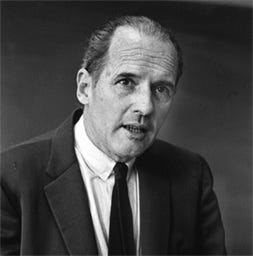
Carroll Quigley — the American historian who taught at Georgetown and consulted for the U.S. Department of Defense — spent decades studying long-cycle power dynamics. His students included Bill Clinton, who credited Quigley with shaping his understanding of how institutions rise, ossify, and reorganize. Members of Kennedy’s national security establishment also valued his work on civilizational resilience and elite circulation. His framework maps the progression from institutional creation to rigidity, decay, and reconfiguration. It offers a macro lens for understanding Africa’s trajectory between now and 2040.
Most analysis of African governance focuses on regime type, corruption indices, or democratic backsliding. These describe surface patterns. They don’t explain how elites lose legitimacy, how new power blocs form, or why post-independence arrangements struggle to absorb today’s economic and demographic pressures.
Africa is entering a reconfiguration window.
The structural indicators are clear. Median age under 20. Persistent youth unemployment even where GDP rises. Tight fiscal conditions across nearly every major economy. Rising debt service burdens. Currency instability becoming a fixed feature of macro management in Nigeria, Kenya, Ghana, Egypt, Ethiopia. Patronage networks — the stabilizing mechanism of elite bargains since independence — running into hard budget constraints.
Meanwhile, parallel power structures are consolidating. Diaspora networks shape capital flows and public narratives. Tech-enabled coordination lowers the cost of collective action. IP, cultural capital, and digital distribution generate new wealth outside state-dominated channels. Geopolitical competition expands the external leverage available to domestic actors.
The distance between incumbent elites and emerging selectors is widening. This is an institutional adaptability problem. Rigid systems weaken when economic capacity and legitimacy migrate to actors outside the traditional order.
Quigley’s key insight: power shifts when credit reorganizes. Not ideological credit — financial and social credit. Who can raise capital. Who commands trust. Who can coordinate meaningful action. Across the continent today, those channels are being rebuilt outside the structures that held since the 1960s.
The next 15 years will determine whether African states reconfigure through deliberate adaptation or through breakdown. The difference shapes market stability, institutional durability, and the cost of transition.
Understanding the Quigley Layer means recognizing that today’s political arrangements in Lagos, Nairobi, Accra, and Addis Ababa are late-phase structures. Replacement is not hypothetical. The live question is the mode of succession and who shapes it.
[Continue reading to access the full structural analysis, elite turnover mechanics, and strategic implications for founders, investors, and policymakers]
Paid Section
I. Defining the Quigley Layer
The Quigley Layer captures the long-cycle forces that govern how elites rise, consolidate, and are replaced.
Quigley identified a recurring sequence across civilizations:
Invention — new institutions solve coordination problems
Expansion — institutions scale and build legitimacy
Conflict — entrenched interests resist further adaptation
Universal Empire — dominant coalitions consolidate the system
Decay — rigidity erodes adaptive capacity
Invasion — internal or external pressures exploit brittleness
Reconfiguration — new elites rebuild the institutional order
The pattern is consistent. Institutions adapt until the costs of preserving them exceed the costs of replacing them. Resistance to adaptation creates the conditions for eventual reorganization.
Africa’s post-independence institutional model sits inside this cycle. The architecture — centralized states funded by commodity rents, donor flows, and narrow tax bases — was viable under specific historical circumstances: Cold War competition, small educated elites, low coordination costs, limited global mobility. Those conditions no longer hold.
What comes next is a reorganization of credit channels. Power migrates toward those who can mobilize capital, command legitimacy, and coordinate action across borders. Formal political office retains symbolism. Its operational value is declining.
II. Mapping Quigley Mechanics to Africa 2025–2040
The pressures driving Africa’s reconfiguration are broad and mutually reinforcing.
Demographic pressure:
Median age of 19, rising educational attainment, constrained economic absorption capacity. This generates elite overproduction — more capable people than the system can absorb. New coalitions of ambition form outside established hierarchies.
Fiscal exhaustion:
Revenue growth lags population and service demands. Debt service ratios expand. Nigeria, Kenya, Ghana, Egypt, Ethiopia, and Zambia face varying levels of distress. Patronage-based stability requires fiscal slack. That slack is evaporating.
Currency instability:
Persistent devaluation weakens institutional credibility. Monetary volatility reflects structural vulnerabilities: narrow export bases, capital flight, chronic trade gaps. Residents adjust by seeking hard currency exposure. States that cannot stabilize their currencies struggle to preserve legitimacy.
Diaspora selectorates:
Remittances exceed formal aid flows. Diaspora capital is mobile, globally informed, politically independent. These networks influence finance, media, policy, and culture. Their autonomy gives them structural leverage.
Geopolitical competition:
A multipolar world increases the bargaining power of domestic actors. China, the US, the EU, the UAE, India, Turkey, Russia — all seek African alignment. Local elites now have more room to negotiate terms.
These forces push the current institutional model toward its limits.
III. Elite Turnover Mechanics in African Context
Elite turnover follows the reorganization of credit channels — where capital originates, how legitimacy is allocated, who can coordinate meaningful action.
For decades, political officeholders controlled the primary credit channel, using state budgets to maintain coalitions. That channel is weakening.
New credit channels:
Tech ecosystems: Startups raise capital independently of government and scale across borders. This creates a pipeline of balance-sheet elites with operational rather than political leverage.
IP and cultural markets: Afrobeats, Nollywood, fashion, and digital content generate economic and narrative power. Their influence travels across borders and demographic lines.
Diaspora capital: External, liquid, mobile. These networks influence business formation, electoral incentives, and public narratives. They do not rely on state permission.
Parallel institutions: Private security, education, healthcare, power supply. These build alternative trust structures, shifting where populations place confidence and allocate resources.
Old credit channels:
Shrinking patronage budgets reduce elite cohesion. Fragmented information environments weaken narrative control. Currency instability accelerates capital flight and erodes local wealth preservation. Officeholders maintain formality but less operational capacity.
Elite transitions begin when exclusivity over critical coordination resources fades. Africa is deep in this phase.
IV. The Coming Reconfiguration Age
The next generation of African elites will emerge from different foundations.
Balance-sheet elites:
Founders, investors, and operators who control capital without depending on political intermediation. Their strength comes from liquidity, execution, and optionality.
IP elites:
Creators who shape attention and culture. Their platforms produce loyalty and global reach — valuable during institutional transition.
Diaspora elites:
Actors with dual positioning and independent capital bases. They influence domestic outcomes without being fully bound by domestic constraints.
Technocratic networks:
Operators who understand how to build institutions that function under volatility. They become pivotal in reconfiguration periods because they convert ideas into systems.
These blocs shift the balance of influence. Political elites remain relevant but must negotiate with other centers of power.
Institutions that adjust to this reality will stabilize. Those that resist will fragment.
V. Implications for Founders, Investors, and Policymakers
For founders:
Build companies with real revenue, clean governance, and cross-border optionality. Prioritize IP and brand equity. Develop internal talent pipelines — institutional transition accelerates demand for capable operators.
For investors:
Prioritize disciplined operators with exposure beyond a single jurisdiction. Favor ventures with paths to hard-currency revenue. Track diaspora-linked opportunities for their structural advantages.
For policymakers:
Design institutions that can absorb new elites. Protect the integrity of capital flows and contract enforcement. Provide predictable frameworks. Avoid rigidity traps that compress legitimacy.
Final Synthesis
The Quigley Layer clarifies the underlying mechanics of Africa’s next power shift. Today’s turbulence signals the exhaustion of a post-independence model and the emergence of new actors with independent economic and narrative capacity.
The indicators are consistent: demographic pressure, fiscal tightening, currency instability, diaspora leverage, the rise of parallel credit channels. These forces create the conditions for elite turnover.
Reconfiguration has begun. The central question is the mode of transition. Power is migrating toward actors who can mobilize capital, sustain legitimacy, and coordinate across borders. Credit is reorganizing. Position accordingly.