

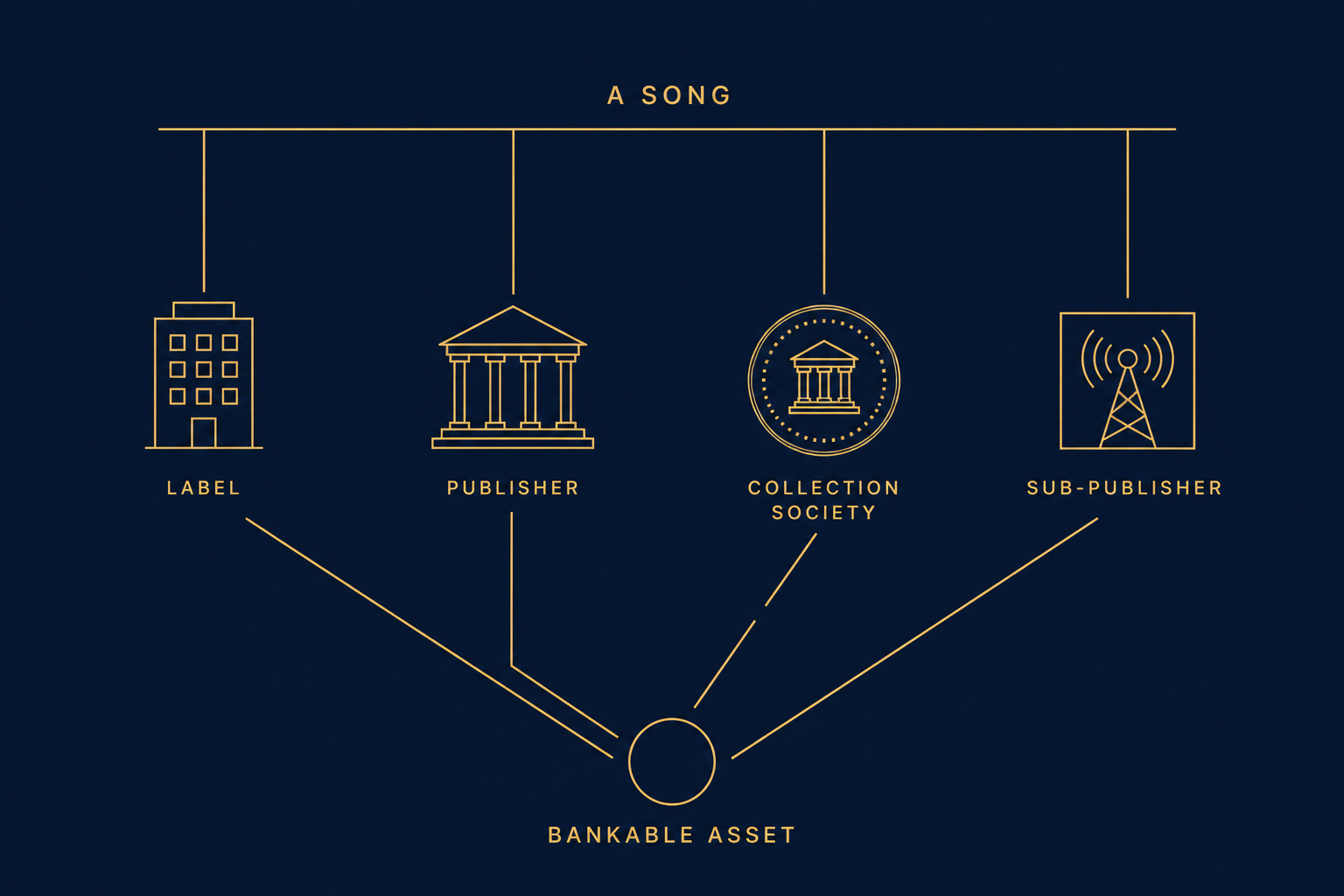
The Saturday essay named the diligence wall. This piece walks through what actually happens at it — the playbook international institutional investors and strategic acquirers run when they diligence an African music catalog they are considering acquiring or financing against. I have run versions of this playbook on more buy-side mandates than I can quickly count over the past three years, both directly and through Technolawgical Partners’ deal practice. The structure below is the operational version of the four-test framework, written for the seller-side reader who wants to know what the buyer will be looking at, in what order, and using what tools.
The thesis is simple. The same playbook the buyer will run on you is the playbook you can run on yourself first. Catalogs that arrive at diligence already remediated close at headline value, in weeks rather than months, with terms structured around opportunity rather than risk allocation. Catalogs that arrive raw close at a fraction of headline, after extended legal workstreams the seller usually ends up paying for through the deal economics. The difference is preparation.
Phase One — Pre-Mandate Catalog Mapping (Weeks 1–2)
Before any diligence team opens a data room, the lead deal lawyer does a structural map of the catalog. The map is not about valuation. It is about what is being sold and who actually owns it.
Three documents get pulled first. The full track schedule, with songwriter and performer credits per work. The corporate ownership chart of the entity holding the catalog. The list of distribution and administration relationships currently in place — which distributor is uploading the catalog to which platforms, which collection societies are registered, which sub-publishers are administering sync.
A competent buyer-side lawyer can usually tell within the first 48 hours of receiving these three documents whether the catalog sits in the bottom quartile (significant chain-of-title gaps, expect heavy remediation), the middle 60% (typical African catalog with some structural defects, expect moderate remediation), or the top 15% (institutionally-grade documentation, ready for facility deployment). The category determines the rest of the workstream timeline and shapes the deal economics.
What the seller can do in this phase: produce these three documents proactively, at the same level of detail the buyer will demand. If you cannot produce a clean track schedule with songwriter and performer credits per work, you do not yet have a catalog institutional capital can underwrite. You only have a body of revenue.
